




























































How To Spot Beech Leaf Disease? Should You Remove The Tree?

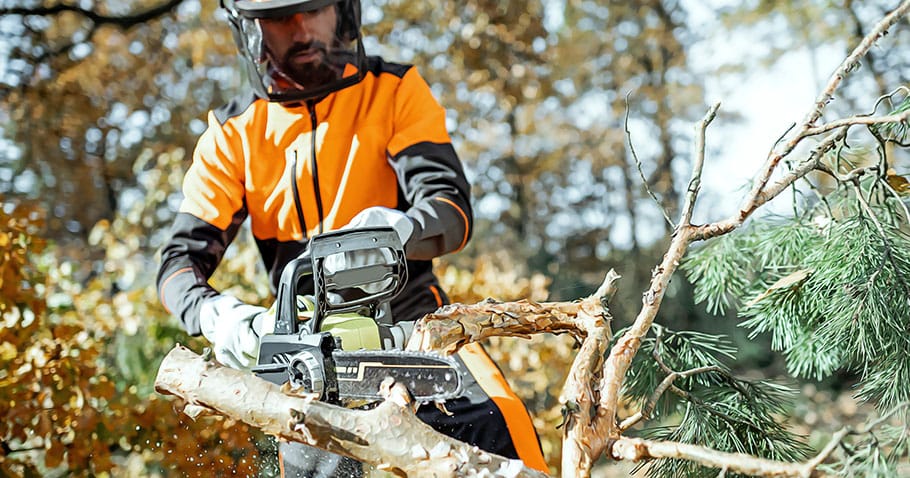
Beech leaf disease (BLD) is a serious beech tree disease that can lead to dieback and even death of your beach tree (American beech, European beach, etc.). So, early detection is very important to care for the tree. This makes hiring tree services the best option for a safe inspection of the tree or removal, as required. Here are some signs of beech leaf disease and whether you should cut down the disease tree or not.
Signs Of Beach Leaf Disease
Dark Banding Between The Veins Of The Leaves
If you look underneath the leaves of an American beech and see dark green stripes running between the veins, that’s the classic telltale sign of beech leaf disease. These bands are usually easiest to spot in late summer when you hold a leaf up to the light. The thickened, darker tissue shows up first in the lower branches, then climbs higher as the disease spreads.
Curled Leaves That Feel Leathery
Infected leaves often start to curl and pucker, taking on a thick, leathery feel instead of the thin, papery texture a healthy beech leaf should have. The edges may roll under, and the whole leaf can look crinkled or wavy.
Many homeowners notice this odd texture before anything else, especially when the change shows up suddenly on branches that looked fine the year before.
Smaller Leaves
Trees struggling with this disease often push out leaves that are noticeably smaller than normal. Instead of the full-sized leaves you’d expect, the new growth comes in short and stunted, and the shoots themselves look compressed.
When a beech keeps producing undersized leaves year after year, it’s a strong hint the problem is getting worse rather than just being a one-time thing.
Thinning Canopy
A healthy beech has a full, dense crown that casts deep shade. When disease sets in, the canopy gradually thins out, letting far more sunlight reach the ground below. You might see bare patches where leaves used to be, especially along the lower limbs. Since beech trees rely on those leaves to feed themselves, a thinning crown is a sign the tree is losing ground.
Early Leaf Drop
Infected trees often drop their leaves weeks ahead of schedule. Instead of holding onto foliage until a normal fall, a sick beech tree may start shedding in mid to late summer, sometimes leaving branches nearly bare by September. It’s easy to blame drought or bugs, but when early leaf drop shows up alongside banded or curled leaves, it’s likely the beech leaf disease.
Twig Dieback
As the disease advances, buds on infected branches start to fail. Some never open in the spring, while others break but produce only tiny, weak leaves.
Over time, whole twigs and small branches die back, leaving dead tips scattered through the crown. This dieback usually starts low in the tree and works its way up, which is a good clue it’s more than ordinary winter injury.
Witches’ Brooming
Some infected beeches sprout dense clusters of short, stubby shoots along their branches, a growth pattern called witches’ brooming. Instead of the long, graceful limbs typical of a beech, you see just twigs crowded together and covered in undersized leaves.
This strange, bushy growth happens because the tree is struggling to replace foliage it keeps losing. Experts consider it a fairly advanced infection.
Yellowing, Washed-Out Leaves
In later stages, leaves that were once dark green turn yellowish and washed out. The tree is essentially starving because damaged leaves can’t make food the way healthy ones do. You might notice a pale, sickly look through the whole crown, sometimes with leaf edges turning brown.
By the time widespread yellowing shows up, the tree has usually been fighting the disease for several years and the tree could be hazardous.
Quick Decline In Young Trees And Saplings
Watch young beeches and saplings closely, because they’re hit hardest and fastest. A small tree that looked healthy in spring can be nearly dead within a year or two of showing symptoms.
Multiple saplings in the same woods declining together is a big warning sign that the disease is in the area. Mature trees decline too, but they usually hang on longer than the little ones.
Should You Remove The Tree Or Save It?
Here are some ways and signs to know whether the tree should be saved or removed by calling in a tree cutting service Kensington.
Signs The Tree Can Be Saved
You Spotted The Disease Early
The single biggest factor is timing. If you catch the disease when banding and leaf curl are limited to a handful of lower branches and the rest of the crown still looks full and green, the tree has a real fighting chance.
Early-stage trees respond better to professional treatments, and they haven’t yet burned through the energy reserves they need to push out new growth.
It’s A Big, Mature, And Otherwise Healthy Tree
Big, established beeches generally stand a better chance than saplings. A mature tree has deep roots, stored energy, and the size to tolerate losing some leaves while it fights back. If the trunk is solid, there’s no major dieback, and the tree isn’t crowded or drought-stressed, it can often hold its own for years with help, while younger, thinner trees tend to go downhill much faster.
The Conditions Are Good
A tree growing in decent soil with reliable moisture has a much better shot at recovery. Watering during dry spells, mulching out to the drip line, and avoiding damage to roots and bark all reduce stress so the tree can put energy into defense. Anything you can do to help a beech behave like it’s growing on a good site tilts the odds in its favor.
You Start Early Professional Treatment
There’s no cure for the disease itself, but treatments applied by a trained arborist have shown real promise when used early enough. Trunk injections done on a yearly schedule can protect leaves and slow the decline, and some treated yard trees have held onto their canopies for several seasons
If your tree is a landscape tree worth saving and treatment starts before heavy dieback, it’s often worth trying.
The Tree Still Leafs Out Normally In Spring
Check what happens in spring. If the tree breaks buds on schedule and covers most of its branches with fresh leaves, even if those leaves show some banding, the tree is still cycling normally. Trees that keep leafing out each year have living buds and good branches, which gives treatments and good care something to work with. Once buds across the crown stop opening, the outlook changes quickly.
Signs To Remove The Tree With Beech Leaf Disease
Most Of The Crown Is Gone
When more than half the crown is bare or dead, the tree has usually crossed the point of no return. Leaves are the tree’s food factories, and once it’s lost most of them for a few seasons running, it can’t rebuild the reserves needed to recover. A beech standing with sparse, scattered foliage at the top and dead limbs throughout is on its way out no matter what you do.
It’s A Young Tree Or Sapling With Severe Symptoms
Young beeches and saplings rarely come back once symptoms take hold. Their small size means they have almost no stored energy to fall back on, and the disease can kill them within a couple of growing seasons.
If a sapling is showing banding, curled leaves, and dieback all at once, removal is usually the practical answer. Focus your effort and money on the bigger, healthier trees nearby.
It Keeps Getting Worse Year After Year
A tree that has gotten worse for three or more straight years, despite watering, mulching, and professional treatment, is telling you it’s losing the battle. Each year of leaf loss weakens it further, and at some point, the damage becomes a downward spiral that interventions can’t stop.
Ongoing decline after a couple of treatment cycles is a reasonable sign that it’s time to plan for removal.
The Tree Has Become A Safety Hazard
Even if a few live branches remain, a declining beech can become a safety problem. Dead limbs over a driveway, patio, or play area, cracks in the trunk, or mushrooms growing at the base all point to wood that’s weakening. If an arborist flags the tree as a hazard, saving it stops making sense. At that stage, removal protects the people and property around it.
Conclusion
Beech leaf disease is a scary one so you should look for the signs to spot it and also consult tree removal companies Chevy Chase who can help you determine if you should save the tree or have it safely removed.